

The dry report never gets wet, not even from a startup founder's tears.
 Shir Luzzatto2 min read
2024 finds the State of Israel in one of the hardest moments in its history. Since the events of October 7, our main focus has been on restoring security and caring for the hostages, the soldiers and civilians. However, the Israeli economy, and Israeli high-tech and entrepreneurship in particular, is another layer that demands our attention, as the locomotive or, in the spirit of the times, the “Iron Dome” of the Israeli economy.
Last week several statistical reports on the first quarter of 2024 were published, and these reports don't concern only academics and people in the high-tech industry. As of 2023, Israel's technology innovation sectors accounted for 40% of GDP. According to a professional assessment prepared by the Budget Division at the Ministry of Finance, the economic impact of the slowdown in the Israeli high-tech industry's growth affects all Israeli citizens. The damage already occurring to output may, according to estimates, lead in the near future to a 4% drop in the average wage in the economy, amounting to ₪500 a month, about 90,000 workers being pushed out of the workforce out of the 350,000 employed in the industry today, and of course a significant hit to tax payments to the state. According to the Ministry of Finance report, although high-tech workers make up only 11% of the population, they account for about 25% of income-tax revenue in Israel.
The “dry” reports look relatively encouraging: a decline of about 55% compared with 2022 (which was an exceptionally strong year), a 70% drop in venture capital raised by Israeli funds, and widespread estimates of down rounds at startups. These figures show a blow to the exponential rise of 2021 and 2022, but they are in line with 2018. In simple terms: not brilliant, but not terrible. How do we say it in Israeli? It'll be fine!
Well, actually, no. In the art of messaging there is a term called “data selling”: in the end you can say whatever you want, as long as you shine the spotlight on the right number.. But if we scratch the surface of the Excel sheet a little and dig deeper, we discover far more troubling pain points. True, there were many “exits” this year, but when did they happen? These are excellent companies that were sold after 2-4 years of operation, probably at a much lower price than they could have gotten before the war. How many of these companies were forced to sell out of fear of what lies ahead? How many of them could have grown into publicly traded companies with thousands of employees in the local industry? That is something the Excel sheet doesn't show. Nor do the reports show the number of startups that chose to incorporate abroad from the outset, or to do a “flip” and change their company registration from Israeli to American in order to win back foreign investors. If you look closely, beyond the high numbers of investment rounds you can see how few investments are being made at the early stages. How many founders, men and women, chose from the outset not to develop their venture this year? How many chose a different path, perhaps more stable but far less beneficial to the Israeli economy? From deep experience in the field: quite a few. And it's hard to blame them. Anyone who chooses today to be a tech entrepreneur in the Israel of 2024 is like Don Quixote, someone fighting against all odds to succeed.
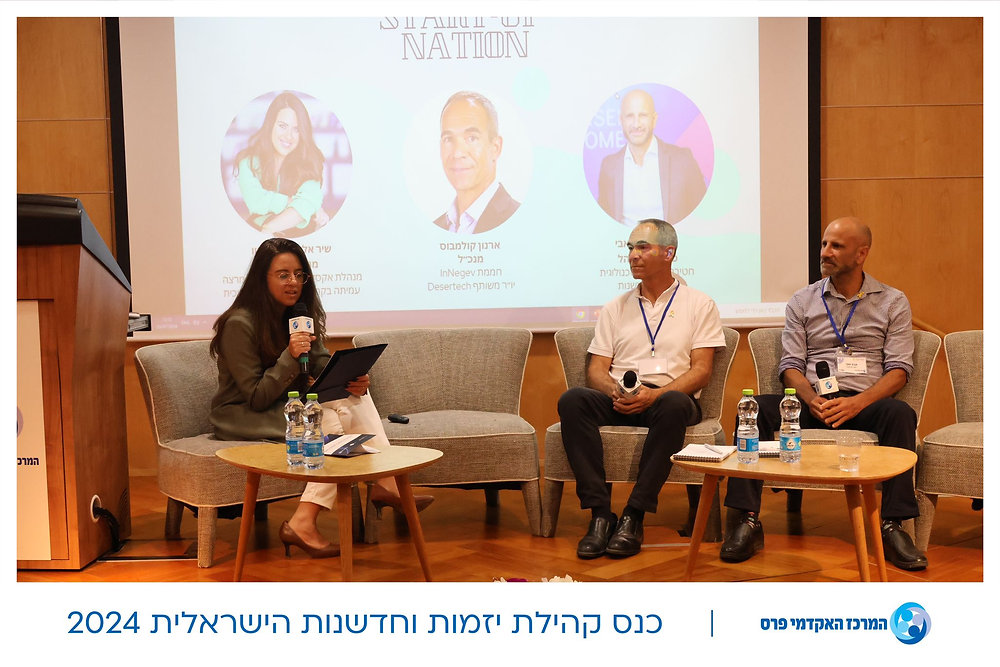
I was and remain an incurable optimist. In my view, this is also our golden opportunity for tikkun olam, repairing the world: creating Start-Up Nation 2.0, more diverse, operating from regions beyond just the “State of Tel Aviv”, with room for genuine geographic and sectoral diversity for the benefit of all the country's citizens. The Israeli government must look beyond the dry numbers and step up to help early-stage startups get through this crisis. With the right lifeline and smart strategic management, I have no doubt we will get through it. What is entrepreneurship, if not holding on to hope? Israel's history shows that in difficult times, the creative and innovative strength of our nation manages to lead us forward. Our high-tech industry, which has become a byword around the world, was born out of crises and has withstood many challenges over the years. Our startups are not just business; they are a symbol of innovation, daring and the Israeli entrepreneurial spirit. The time has come for a techkuma, a tech revival .